What is Google Tag Manager (GTM)?
GTM is a tag management system that allows you to inject and update measurement snippets of code onto a website. When these code fragments have been added to a project, you can safely and easily deploy analytics and measurement tag configurations from a web-based user interface.
How to implement GTM tags?
Google Tag Manager uses these concepts to handle how tags are configured and fired:
-
Tag: A tag is code that sends data to a system such as Google Analytics.
-
Trigger: A trigger listens for certain events, such as clicks, form submissions, or page loads. When an event is detected that matches the trigger definition, any tags that reference that trigger will fire.
-
Variable: A variable is a named placeholder for a value that will change, such as a product name, a price value, or a date.
-
Data layer: Tag manager implements a data layer to temporarily hold values in the client so that they can be used by tags, triggers, and variables.
More details found here: Components of Google Tag Manager - Tag Manager Help
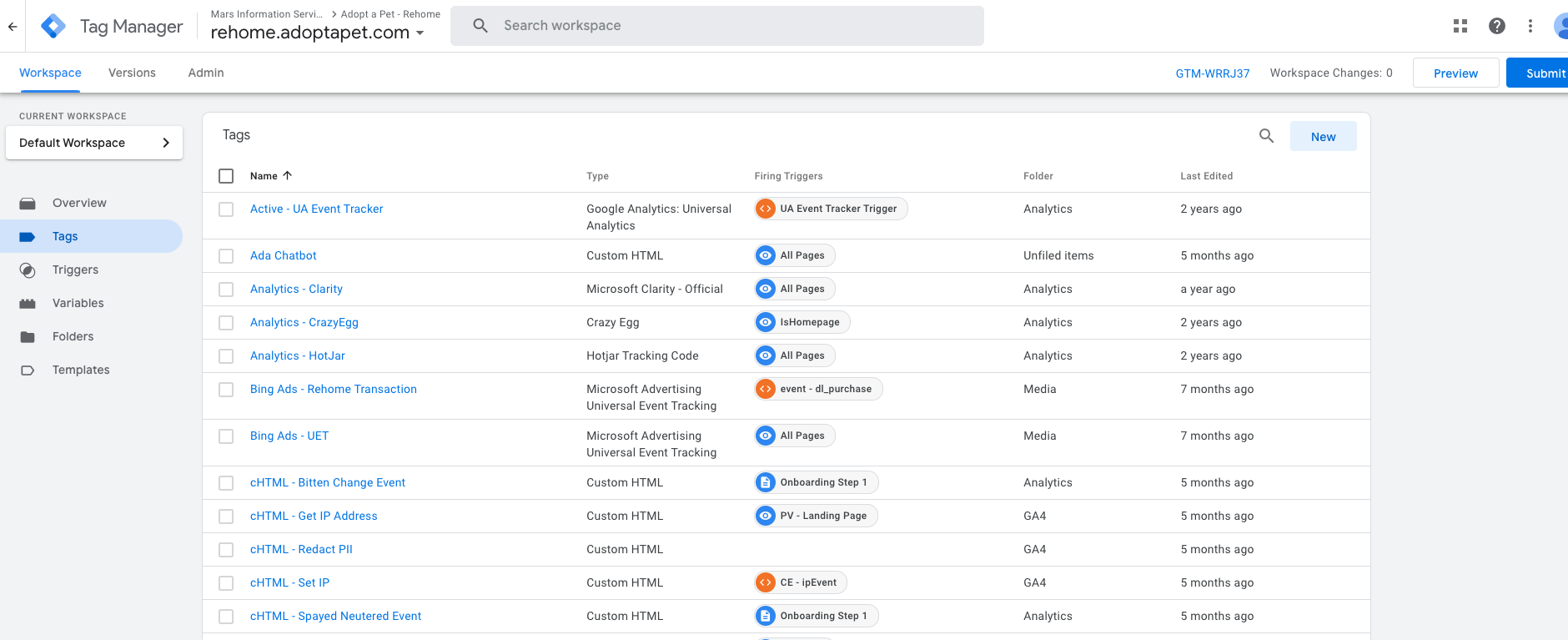
:::tip Info
In summary, tags are snippets of code injected onto the website, triggers fire the tag to the site, and variables can be leveraged by tags and triggers. All tags require a trigger!
:::
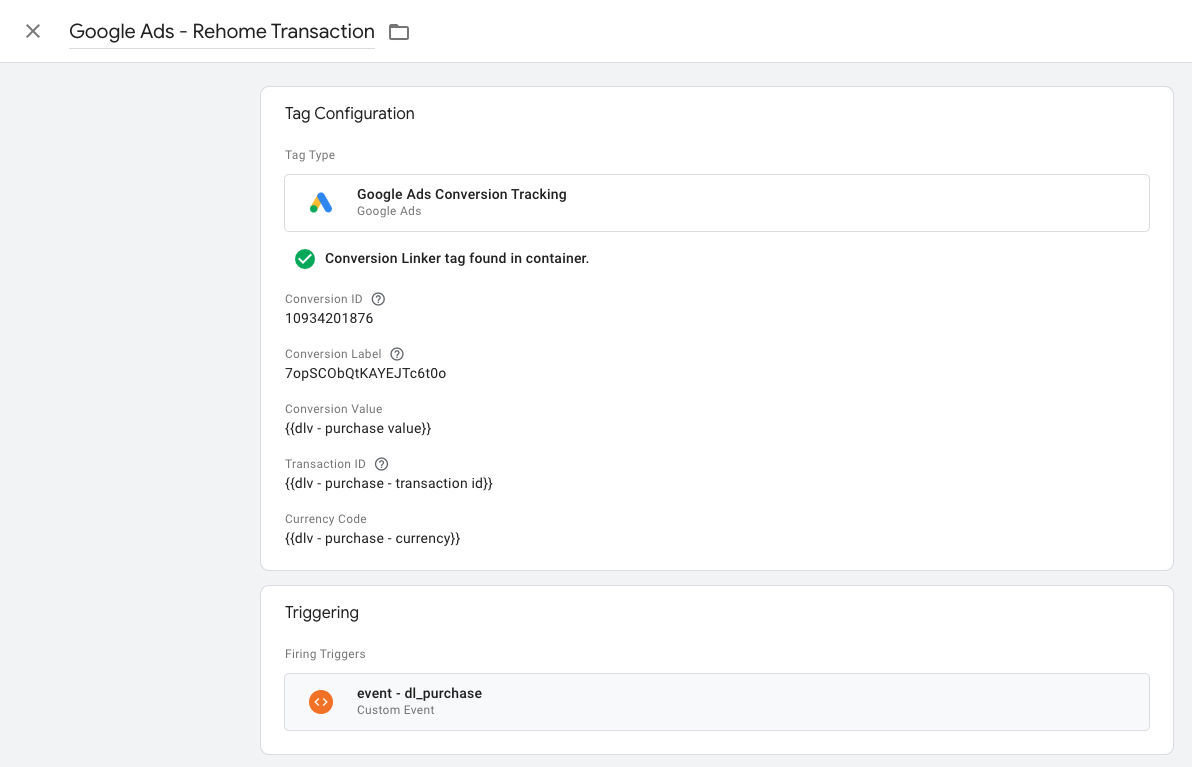
For example,
- Tag: Google Ads - Rehome Transaction
- Trigger: event - dl_purchase
- Variables (we use variables because they enable dynamic values! E.g. every purchase has a different purchase value)